Understanding Antidepressant Withdrawal
“There are wounds that never show on the body that are deeper and more hurtful than anything that bleeds.” - Laurell K. Hamilton
If you've ever tried to reduce or stop an antidepressant, you may have been surprised by how difficult it felt. You may have even been told that because you were taking a "small dose," stopping should be relatively easy. Over time, the brain and body adjust to having an antidepressant in the system. When the dose is lowered or stopped, the nervous system needs time to adjust again. This can lead to antidepressant withdrawal.
Withdrawal is different from addiction. Antidepressants do not typically cause cravings or drug-seeking behavior. Instead, withdrawal occurs because the nervous system has physically adapted to the medication. You may also hear withdrawal referred to as "antidepressant discontinuation syndrome."
Withdrawal can occur after reducing a dose, stopping a medication, or sometimes even missing doses. Some antidepressants are more likely to cause withdrawal than others, but it can occur with many different antidepressants.[1]
What Does Antidepressant Withdrawal Feel Like?
Withdrawal can affect both the body and mind. Symptoms vary from person to person and may include:[1]
Anxiety, low mood, irritability, or panic
Difficulty sleeping or vivid dreams
Dizziness or problems with balance
Nausea or flu-like symptoms
Headaches
Tremors or restlessness
Sensitivity to light or sound
Electric-shock sensations, often called "brain zaps"
Changes in thinking, concentration, or emotions
Some people experience few or mild symptoms, while others may be much more sensitive to changes in their medication.
Withdrawal, Relapse, or Rebound?
One challenge with antidepressant withdrawal is that it can sometimes look like the return of anxiety, depression, or another mental health condition.[1,2]
There are a few different possibilities:
Withdrawal happens as the brain and body adjust to a lower dose or the absence of the medication.
Relapse means the original condition, such as depression or anxiety, has returned.
Rebound refers to symptoms that temporarily return more strongly than they were before treatment. One way to picture this is a ball being held underwater. When released, it may briefly rise above the surface before settling back down.[2]
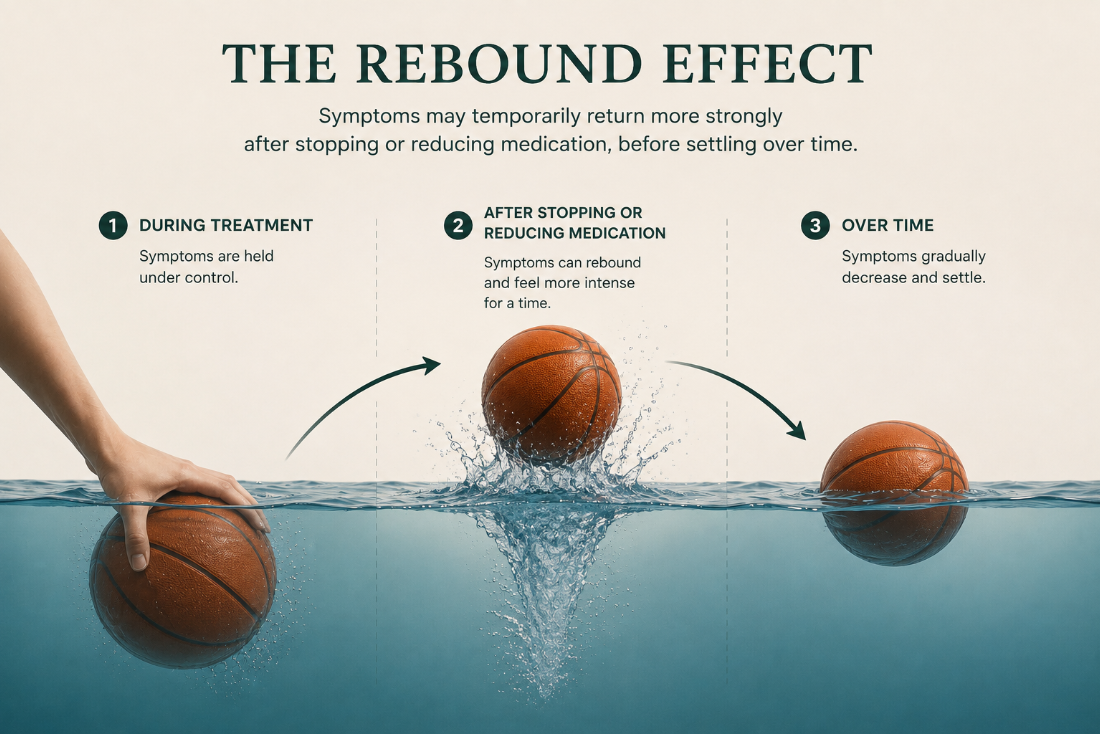
These experiences can overlap and are not always easy to tell apart. The timing of symptoms, recent medication changes, new or unusual physical symptoms, previous experiences with tapering, and how symptoms change over time can provide helpful clues.[1,2]
For this reason, symptoms that appear after reducing an antidepressant should not automatically be assumed to be either withdrawal or a return of the original condition.
Protracted Antidepressant Withdrawal
For many people, withdrawal symptoms improve as the brain and body adjust. However, some people report symptoms that continue for months or longer after reducing or stopping an antidepressant. This is often referred to as protracted antidepressant withdrawal.
Protracted withdrawal can include both physical and emotional symptoms, such as anxiety, depression, sleep problems, brain fog, fatigue, dizziness, headaches, digestive problems, tremors, sensory changes, and brain zaps.[3]
Symptoms may also fluctuate over time. Some people describe periods of feeling better followed by periods when symptoms become more noticeable again. In some reports, symptoms have appeared or become more intense after a period of feeling relatively well.[3]
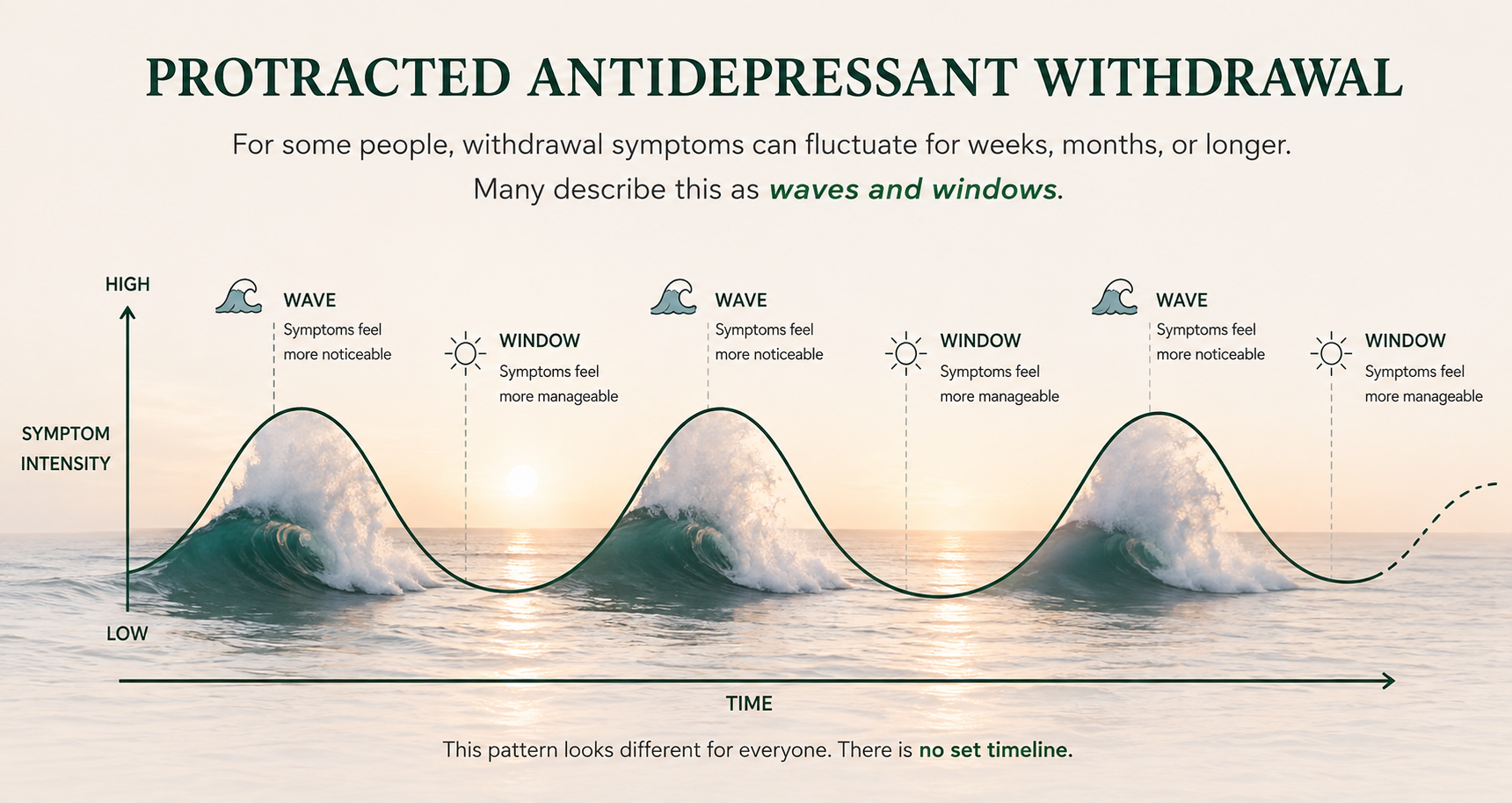
Because symptoms such as anxiety, depression, panic, and insomnia can resemble the original condition, protracted withdrawal can be difficult to recognize. New physical symptoms, the timing of symptoms in relation to medication changes, and symptoms that feel different from a person's previous experience may provide useful clues.
Research on protracted antidepressant withdrawal is still limited. We do not yet know exactly how common it is, why some people experience it while others do not, or how long it may last for any individual.[3]
Why Proper Tapering Matters
Depending on how long you’ve been taking the medication and a specific dose, stopping an antidepressant abruptly can increase the likelihood of withdrawal symptoms. Gradually reducing the medication may give the brain and nervous system more time to adjust.[1,2]
However, even a traditional gradual taper may be too fast for some people, particularly after long-term antidepressant use, previous difficulty stopping, or a history of withdrawal symptoms.
This is where hyperbolic tapering may be helpful. Hyperbolic tapering uses progressively smaller dose reductions as the medication dose gets lower, with the goal of making each change easier for the nervous system to adjust to.
Learn more: What Is Hyperbolic Tapering?
Written by: Vivek Patel, MSN, FNP-C, PMHNP-BC
Medical Disclaimer: This article is for educational purposes only and is not a substitute for individualized medical advice. Do not stop or change a prescribed medication without discussing it with your healthcare provider.
References
Perry T, editor. Therapeutics Letter. Vancouver (BC): Therapeutics Initiative; 1994–. Letter 156, Antidepressant withdrawal syndrome – Update. 2025 Jun.
Henssler J, Heinz A, Brandt L, Bschor T. Antidepressant Withdrawal and Rebound Phenomena. Dtsch Arztebl Int. 2019;116(20):355–361. doi:10.3238/arztebl.2019.0355.
Hengartner MP, Schulthess L, Sorensen A, Framer A. Protracted withdrawal syndrome after stopping antidepressants: a descriptive quantitative analysis of consumer narratives from a large internet forum. Ther Adv Psychopharmacol. 2020;10:2045125320980573. doi:10.1177/2045125320980573.
