The Search for a Fulfilling Life
"You exist in this world to give and serve, not to possess and command" - Saint Charbel Makhlouf
What makes a life feel fulfilling? For many of us, the answer becomes tied to the things we hope to experience, accomplish, or have: a meaningful career, financial security, a loving relationship, good health, confidence, recognition, travel, family, or a sense that we have made something of our lives. These are meaningful parts of being human, but our attention can easily become consumed by the distance between the life we have and the life we imagine would feel more complete. And to complicate things, sometimes finish line moves further back (read more: The Trap of “I’ll Be Happy When…”).
Social media has given us more opportunities than ever to measure that distance. Every day, we are exposed to other people’s relationships, careers, homes, bodies, travels, accomplishments, and milestones. We see someone getting married while we are still looking for a partner, advancing professionally while we feel stuck, traveling while we are working, or appearing confident while we are questioning ourselves. Over time, our attention can become increasingly oriented toward what is missing. There is always something else we could have, somewhere else we could be, or someone else we could become.

Years ago, I had the opportunity to visit the beautiful country of Lebanon. It was a place facing significant economic hardship and political instability, yet on a typical weeknight in downtown Beirut, you could easily forget that for a moment. Restaurants were filled, people gathered late into the evening with fanny packs full of cash, and there was an energy and warmth that existed alongside the difficulties of everyday life.
But beyond the sights and nightlife, one of the highlights of my time there was spending time with a local Maronite Catholic group that welcomed me with incredible warmth. I remember nights with them in the mountains at the home of a priest named Father Roger. We would gather in one of the more updated rooms on the second floor of the house, talking, praying, listening to sermons, and singing songs of praise. Up in the mountains, the air felt lighter, cooler, and crisper than it did in the city, carrying a dry pine scent. Every so often, the electricity would go out. Me being me, I would try to help get it back on, but I never quite figured out the Lebanese mountain electrical work. From the house, you could see the lights of the city far below and a sky filled with stars above. Across the mountains were scattered homes, their lights occasionally flickering on and off, and every so often you could see a car making its way along one of the winding mountain roads.
Some people were struggling to find work, but within the community there was food to share. Some had joined while going through difficult periods in their lives and found people who came to feel like family. A night together required very little: a room, some food, music, conversation, prayer, and one another’s company. There was something beautiful about how little was needed for the moment to feel full. The word that comes to heart when I think back on it is simplicity.
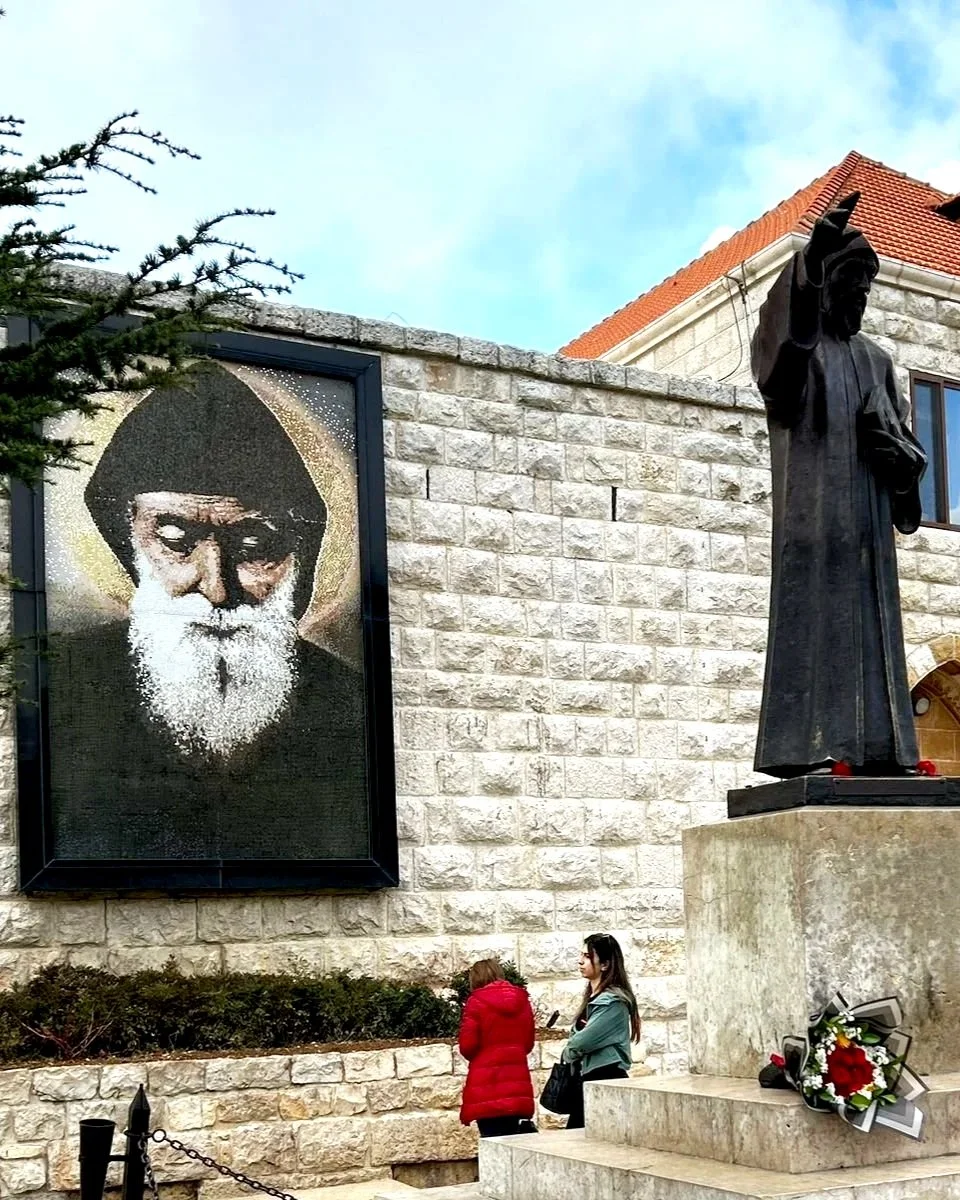
Throughout Lebanon, you’ll also see the face of St. Charbel, one of the country’s most beloved Maronite Catholic saints, almost everywhere. I had the privilege of visiting his monastery and seeing people of different backgrounds and faiths, from all over the world, come to pray and express gratitude for miracles and blessings they believed they had received through his intercession. The stories varied. Some said they saw him in a dream; others first heard of him through a stranger. Whatever had brought them there, many felt that somehow, in the midst of their struggle, the love of this Saint had reached them and brought healing.
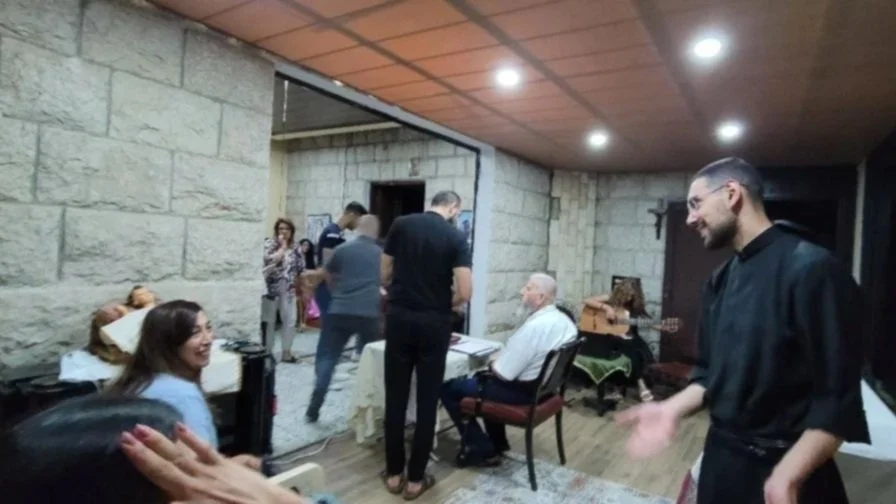
Fulfillment in this timeline seemed less complicated in the places where love, simplicity, and service were prominent. People shared what they had, showed up for one another, and found richness in being together.
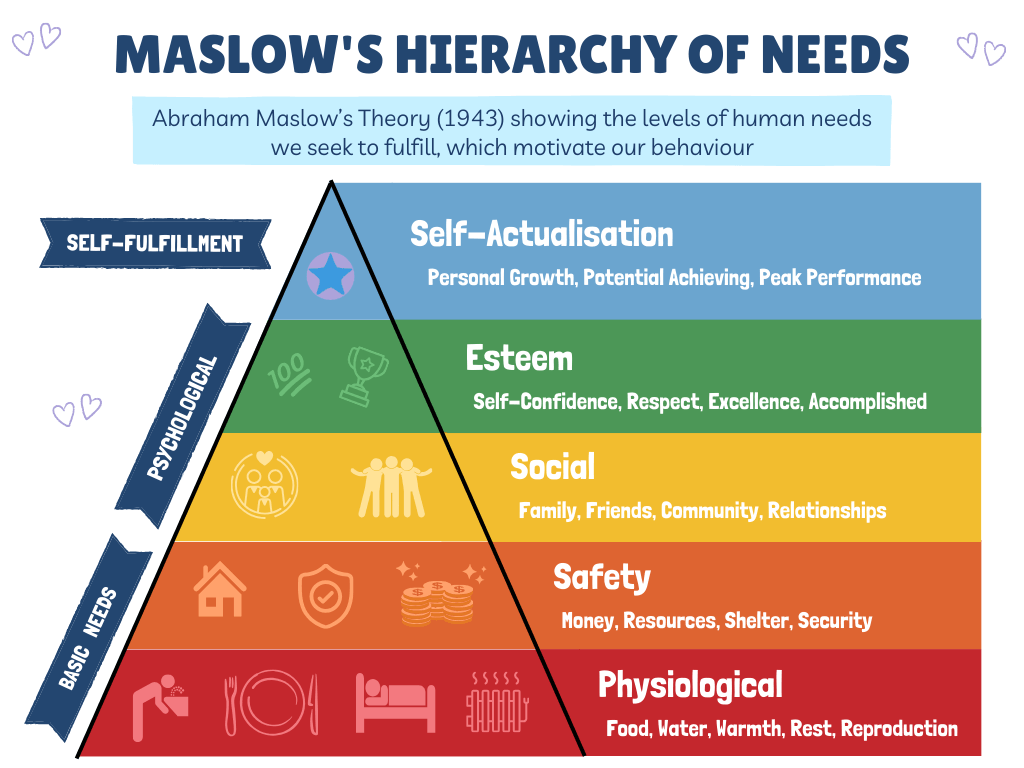
Maslow’s hierarchy of needs offers one way of understanding what we are actually searching for when we think about a fulfilling life. At the foundation are physiological needs such as food, water, shelter, sleep, and the basic conditions that keep us alive. Once those needs are reasonably met, safety becomes important: stability, health, financial security, and some sense that tomorrow is predictable.
We also need love and belonging- the experience of being connected, accepted, cared for, and part of something beyond ourselves. Esteem involves feeling capable and developing a sense of worth, accomplishment, confidence, and recognition. At the level Maslow called self-actualization, the focus turns toward becoming more fully who we are: developing our abilities, creating, pursuing what matters to us, and expressing our potential.
Seen this way, many of the things we chase are connected to something deeper. Wanting more money may really be about wanting security, independence, or the freedom to make choices. Wanting a relationship may carry a longing for intimacy, companionship, or belonging. Career advancement may offer achievement, recognition, purpose, or the feeling that our abilities are being used. Even the lifestyles we admire can represent something underneath the surface - freedom, adventure, stability, connection, or possibility. Understanding the need beneath the desire gives us something much more useful to work with.
This can also change how we think about success. We tend to measure a successful life through what can be seen: income, titles, accomplishments, possessions, attractiveness, relationships, followers, or recognition. Some of the most meaningful parts of a life are much harder to display. The person you comforted during a difficult season, the way you showed up for your family, the courage it took to begin again, the kindness you offered when nobody was watching, the wisdom gained through something painful, or the ways your presence changed another person’s experience may never appear on a résumé or social media profile. They still become part of what your life has given to the world.
Psychological maturity involves coming to terms with the limits of a single human life. Choosing one direction leaves others unexplored. Every relationship opens certain possibilities while closing others. Every career carries opportunities and tradeoffs. Our strengths exist alongside limitations. We cannot experience every future, develop every talent, visit every place, or become every version of ourselves we can imagine. There can be grief in accepting this, along with a certain freedom. Energy once spent chasing imagined versions of ourselves can be invested more fully in the person who is actually here and the life that is actually unfolding.
Building a life will always involve some uncertainty. We can learn from others, admire them, seek guidance, and allow their lives to expand our imagination. Then we can bring that attention back home. What do I value? What kind of person am I becoming? What do I want to experience, cultivate, contribute, and give?
Perhaps fulfillment grows as we become more present to the life that is ours… allowing what we admire in others to teach us something about ourselves while investing more deeply in the opportunities we have to love, create, serve, experience, and contribute.
Written by: Vivek Patel, MSN, FNP-C, PMHNP-BC
Medical Disclaimer: This article is for educational purposes only and is not a substitute for individualized medical advice.
